
Acrel Medical Isolated Power Supply System for Luanda General Hospital, Angola
Nov 13, 2026
Acrel supplied eight complete medical IT sets to the China-aided reconstruction and expansion of Luanda General Hospital. The systems sit behind the operating rooms, the ICU and the CCU: on a first earth fault the alarm goes off and the supply stays on.
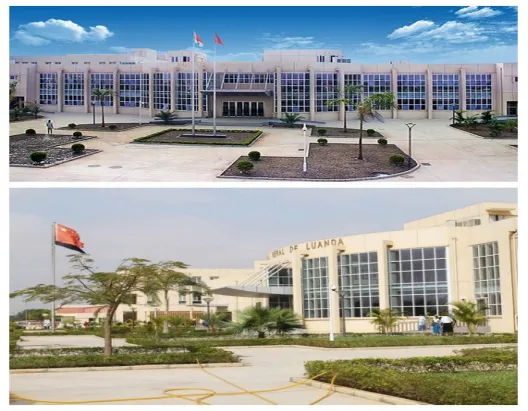
Luanda General Hospital, Angola, after the reconstruction and expansion.
An operating table, a ventilator, an anaesthesia machine and the imaging equipment all hang off the same distribution board. A procedure can run six or seven hours. A trip in the middle of it is not an inconvenience, it is an event with a patient on the table.
And once the equipment touches or enters the patient, the numbers change. A leakage current that would be harmless on a workshop floor is a risk to a person under anaesthesia. That is why IEC 60364-7-710 puts group 2 medical locations on a different footing from the rest of the building: their important equipment must be fed by an IT system, and that system must have insulation monitoring.
The purpose of the IT system is not to prevent faults. It is to make the first fault survivable. The circuit is not earthed at the transformer, so a single fault to earth does not draw the current that would trip a breaker. It draws a small leakage, the monitor sees it, the alarm comes on, and the room keeps working.
A medical isolation transformer takes the grounded TN-S supply and turns it into an ungrounded IT system for the critical load. Around that transformer, four more pieces do the watching and the reporting:
- AIM-M insulation monitoring device — reads insulation resistance, load current and winding temperature, and gives a relay output when something moves out of range.
- AKH-0.66P26 current transformer — 2000:1, measuring up to 60 A, split core, mounted inside the cabinet.
- AIL fault locator — where fitted, points to the branch that caused the fault instead of leaving the whole room to be searched.
- AID alarm and display unit — shows the state of the system where staff actually stand, not in a plant room down the corridor.
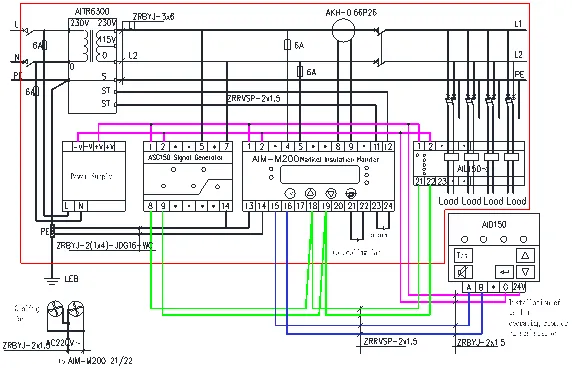
Complete wiring: transformer, monitor, current transformer, alarm panel and the optional locator on one diagram.
Eight sets across the operating rooms, ICU and CCU of the rebuilt hospital. Each set follows one of two configurations, and the choice comes down to one question: does the site need to know which branch failed, or is the room-level alarm enough?
Operating rooms. Option I keeps insulation monitoring and the room alarm. Option II adds AIL150 locators, so a fault is pinned to a circuit. Above eight circuits, two AIL150 units can be combined — AIL150-8 with AIL150-4 for up to 12 circuits, or AIL150-8 with AIL150-8 for up to 16.
ICU and CCU. Same two options. The difference is where the display goes: one central AID unit at the nurse station, so the shift can see every isolated cabinet in the ward from one point instead of walking to each one.
Inside the operating room, the AID unit is mounted on or beside the intelligence panel, at eye level, so the circulating staff see it during the procedure without leaving the room.
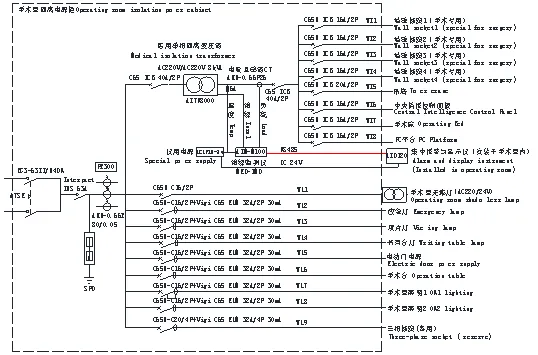
Operating room — Option I, without fault location.
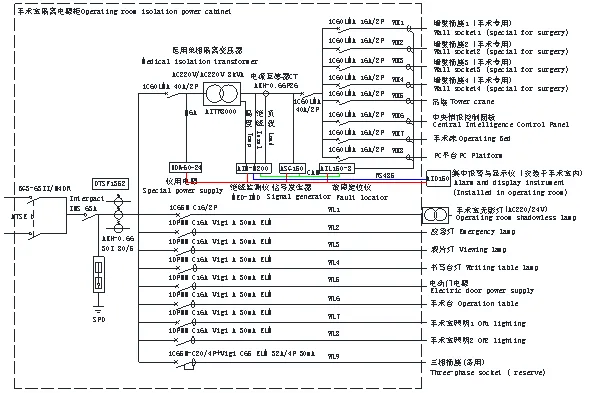
Operating room — Option II, with AIL150 fault location.
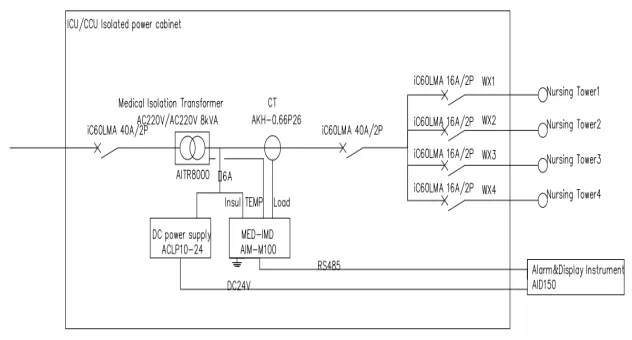
ICU / CCU — Option I, without fault location.
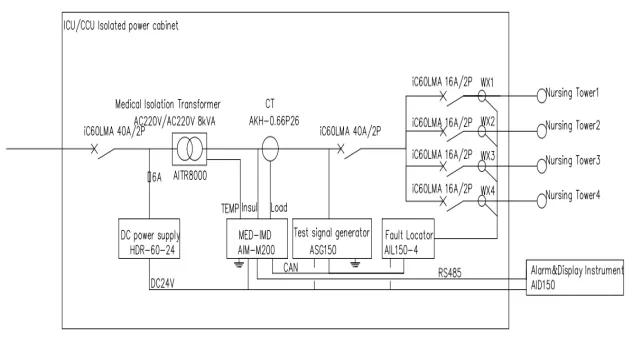
ICU / CCU — Option II, with AIL150 fault location.
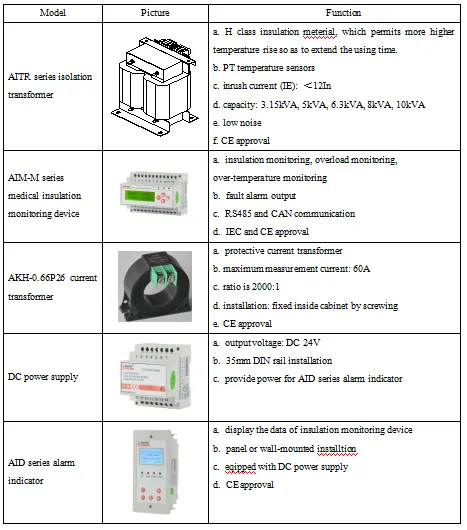
Product selection used on the project.
The sets were assembled into cabinets and mounted in the technical areas of the hospital, with the alarm panels repeated at the room and at the nurse station. Commissioning followed the drawings shipped with the sets: insulation test, alarm test, then a fault injected on one branch to confirm the locator reports the right circuit.
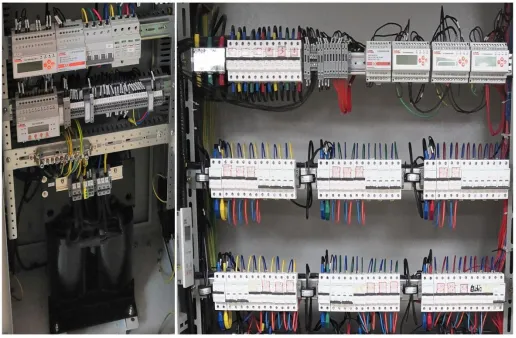
Inside a site cabinet: transformer, monitoring modules and the distribution breakers.
Eight sets is not a large order. What the project shows is that the package travels: transformer, monitor, current transformer, alarm panel, power module and, where the site asks for it, the locator — all from one supplier, with drawings and commissioning support, so the local installer only has to follow the layout.
For hospital electrification work in Peru and the wider region, the same configuration applies. The standards are the same, the room types are the same, and the question at the start of every project is the same one: alarm at the room, or fault location down to the branch.
Send the room list — how many operating rooms, ICU beds and CCU beds — and we return the cabinet layout, the bill of materials and the price for the area. OEM branding is available for panel builders.
Phone and WhatsApp +86 187 2109 7719
[1] Acrel. IT System Insulation Monitoring Device and Fault Location System, 2020.
[2] IEC 60364-7-710:2002 — Electrical installations of buildings, Part 7-710: Requirements for special installations or locations — Medical locations.
[3] IEC 61558-2-15:2011 — Safety of transformers, reactors, power supply units and combinations thereof, Part 2-15: Particular requirements and tests for isolating transformers for the supply of medical locations.
Project: reconstruction and expansion of Luanda General Hospital, Angola, carried out by China Railway Fourth Bureau.

October 26, 2016
The Most Successful Engineering Contractor

Mar 29, 2024
Wireless Temperature Monitoring Device in Russia


Contact US
Product Information
Quantity
Unit
Piece
Support order samples, customization, wholesale direct, and complete payment. If the product you look for does not have corresponding customized content, pls fill out the form below to contact us, and we will reply ASAP.