
Multi-Circuit Energy Meters for Restaurants: 300 Burger King Sites in France
Oct 30, 2026
A French energy service provider is sub-metering 35 kitchen and HVAC loads in every Burger King restaurant it retrofits — using Acrel multi-circuit meters and LoRaWAN gateways. Fifty stores are live, 60 more were ordered in late 2025, and another 30 in 2026.
Brio Energy, a French energy-management company that runs monitoring programmes for restaurant and hotel chains, was preparing a preventive-maintenance and energy-efficiency retrofit for Burger King restaurants in and around Paris. The target: roughly 300 sites, with lighting, extraction fans, ventilation, fryers, broilers, cold rooms and rooftop units on the list.
The problem was visibility. Each restaurant had only an incoming main meter, so nobody could tell which piece of equipment was drawing what. The retrofit needed sub-metering — and it had to work inside the constraints of an existing restaurant:
The enquiry reached Acrel through Google: Brio Energy's project lead, Sylvain Gully, searched for a multi-circuit energy meter with current transformers included, and asked whether Acrel had a distributor in France. There wasn't one yet — so the project was handled directly, with online technical sessions between Brio's team and Acrel engineers.
Two meter variants were selected: ADW210-D10-4S and ADW210-D16-4S, both DIN-rail multi-circuit meters. Several units are installed per restaurant, each covering a group of circuits with its own current transformers. CT ratios were matched to the load: 5 A for lighting and small power, 30 A for fryers and ventilation, 250 A for rooftop units. Measured accuracy is 1% across 10–120% of the CT rating.
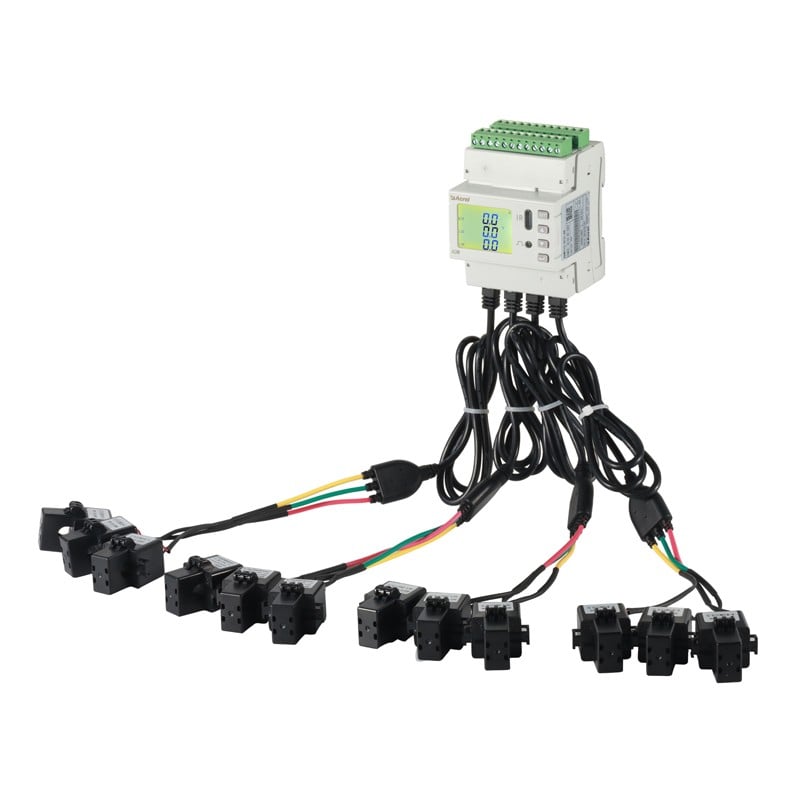
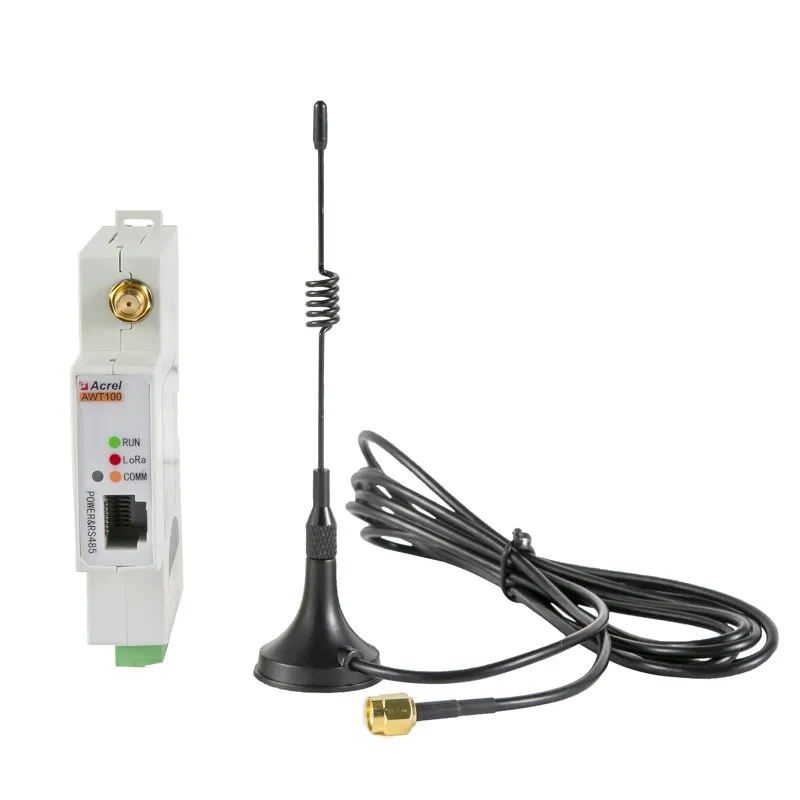
Data leaves the panel over RS485. An AWT100-CEHW gateway converts the Modbus RTU data to LoRaWAN, which keeps cabling short inside the restaurant and avoids pulling new network cable through ceilings. A Milesight gateway on site forwards the data over 4G or Wi-Fi to Brio Energy's own platform, where store managers and the maintenance team see the readings.
| At a glance | Specification |
|---|---|
| Meter | Acrel ADW210-D10-4S / ADW210-D16-4S, DIN-rail, multi-circuit |
| Current transformers | 5 A / 30 A / 250 A, matched per circuit |
| Accuracy | 1% (10–120% of CT rating) |
| Local communication | RS485, Modbus RTU |
| Uplink | AWT100-CEHW LoRaWAN gateway → Milesight gateway → 4G / Wi-Fi |
| Platform | Brio Energy monitoring platform |
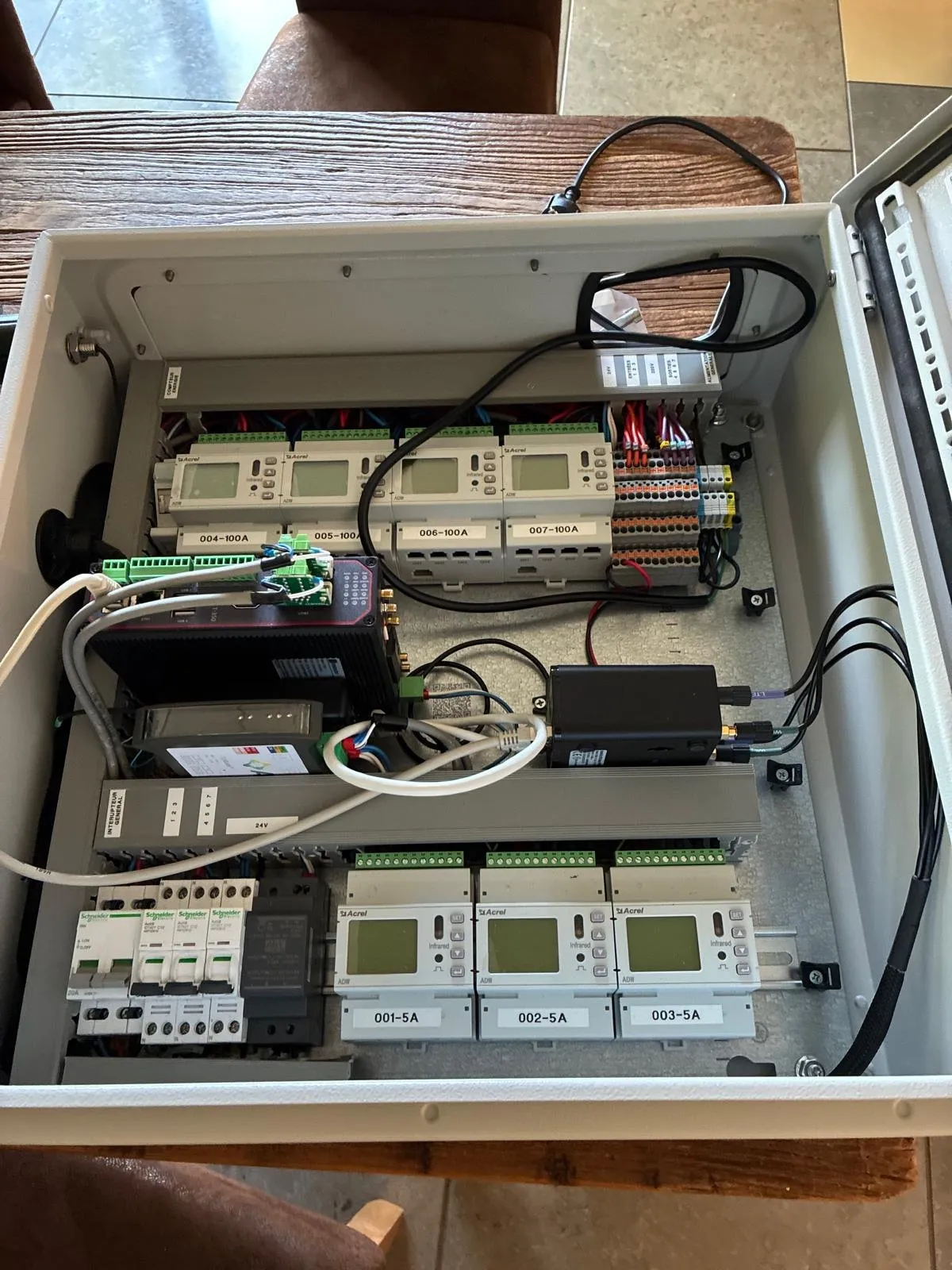
The project did not start with a 300-store order. It started with a technical conversation, then a small batch.
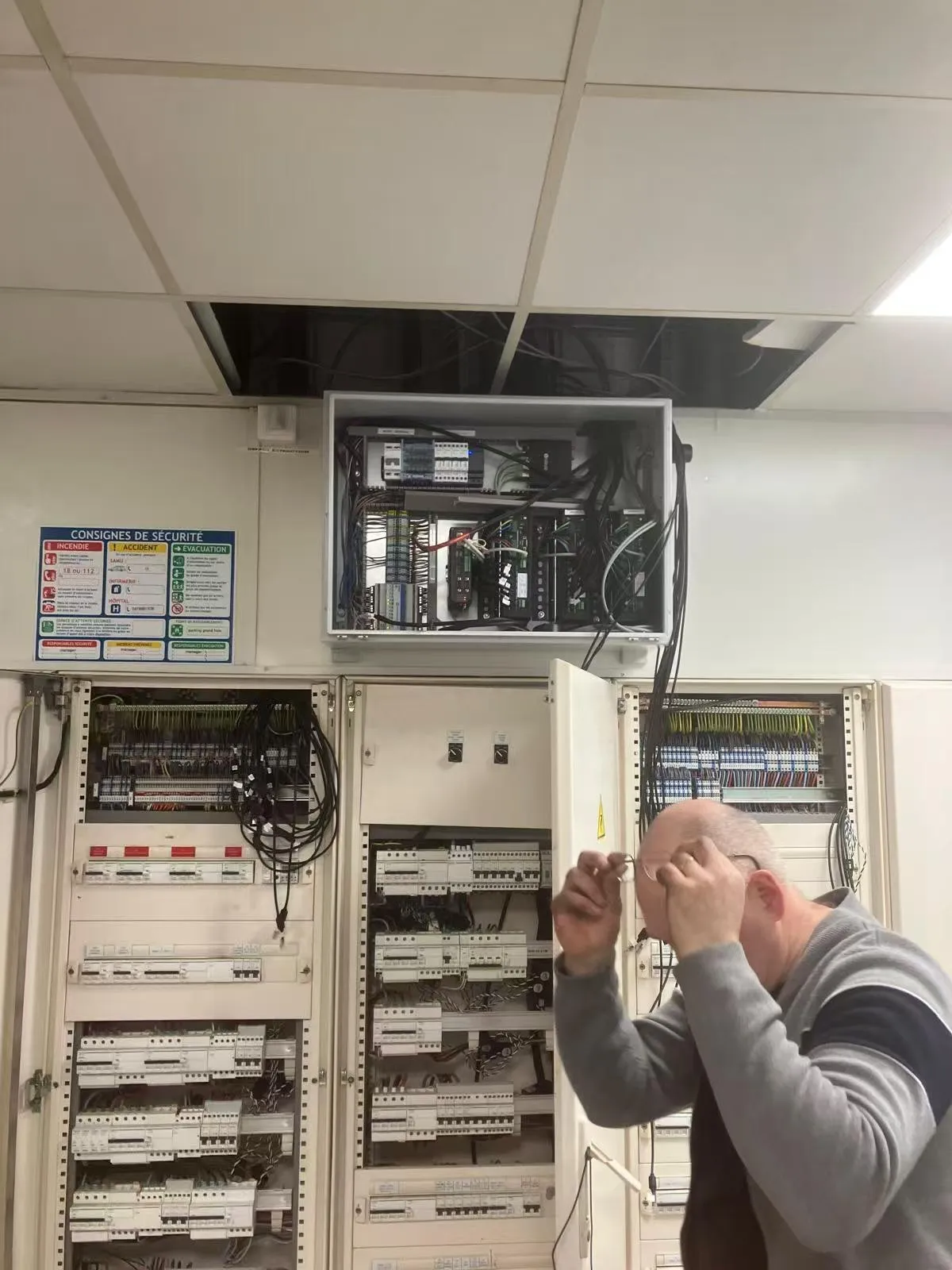
Once every circuit is metered, the platform does more than display kWh. Brio Energy uses the readings for four things:
Consumption is read remotely instead of copied by hand during site visits — fewer manual readings, more reliable data.
Each store's consumption is tracked in real time, so high-consumption equipment can be adjusted before it becomes a cost problem.
Consumption per unit area and regional averages let the chain compare stores of different sizes on the same basis.
Readings from air conditioning, signage, lighting and heaters identify where an upgrade pays back fastest — and the platform calculates the payback period.
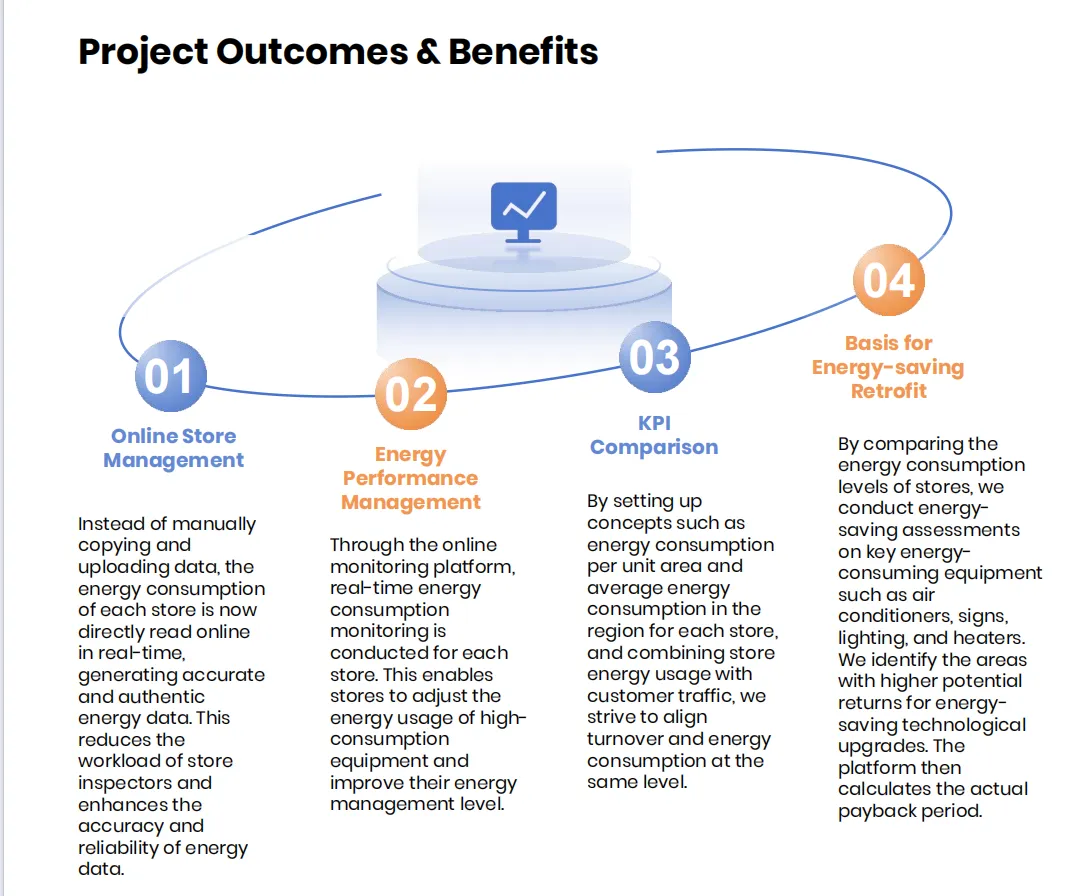
For a restaurant, the practical value shows up in preventive maintenance. A fryer drawing more current than its usual profile, or a cold room compressor cycling differently, is visible in the circuit data before it becomes a breakdown. That is the difference between reacting to failures and scheduling service around them.
The French rollout is a large-scale example of a problem that looks the same in Lima, Bogotá or Santiago: a chain with dozens of sites, one meter per location, and no way to tell which equipment is wasting energy. Rising tariffs and aging kitchen equipment make the gap more expensive every year.
The same architecture scales down to a single site. A 20–40 circuit restaurant can start with two or three ADW210 meters and one AWT100 gateway, keep the existing panel, and send data to a local platform or a cloud dashboard. No new cable trays, no rewiring of the kitchen.
For distributors and system integrators in South America, the retrofit model is repeatable: survey the panel, match CTs to each circuit, install meters during a maintenance window, and let the platform do the reporting. Acrel supports OEM and private-label programmes for partners building this service locally.
Yes — small lighting and signage circuits were measured with 5 A CTs in this project, while fryers and rooftop units used 30 A and 250 A CTs. Matching the CT to the circuit is the key step.
ADW210 is a DIN-rail meter, and several circuits share one unit. In this project the meters went into the cabinets already on site, with no new electrical room.
Yes. The meters output Modbus RTU over RS485; the AWT100-CEHW gateway forwards it over LoRaWAN, and the data can be routed to a third-party or in-house platform.
Send us your load list and panel photos — we will propose a meter and CT configuration for your restaurants.

October 26, 2016
The Most Successful Engineering Contractor

Mar 29, 2024
Wireless Temperature Monitoring Device in Russia


Contact US
Product Information
Quantity
Unit
Piece
Support order samples, customization, wholesale direct, and complete payment. If the product you look for does not have corresponding customized content, pls fill out the form below to contact us, and we will reply ASAP.