
Capacitor Cabinet Bulging & Power Factor Penalties? Acrel ANSVG Solves "PV Aftereffect" at Source
Oct 23, 2026
Installing photovoltaic systems is intended to save energy and cut operating costs. But after grid connection, many industrial users suffer a sharp drop in power factor and heavy power-factor adjustment penalties month after month. In one Shanghai food seasoning factory, 13 of 40 capacitors bulged and failed completely. The site adopted the Acrel ANSVG static var generator — turning power-factor penalties into rewards within just over one month.
The seasoning manufacturer installed on-site solar PV systems in 2026. Solar power is a great green-energy solution, yet several electrical issues emerged after grid synchronisation. The plant's local consumption load is relatively small, so most generated solar power cannot be consumed on site: the active power drawn from the utility transformer decreased significantly while reactive power remained high. During peak sunlight hours, the power factor of two 1600 kVA transformers dropped to around 0.5 and 0.3 — field measurements recorded values as low as 0.37 and 0.49.
What does a power factor of 0.3 or 0.5 mean? Utility regulations impose surcharges when the monthly average power factor falls below 0.90. For every 0.01 reduction in power factor, the electricity bill increases by 2%. This results in unnecessary monthly expenses and forces the whole distribution system to operate under unhealthy conditions.
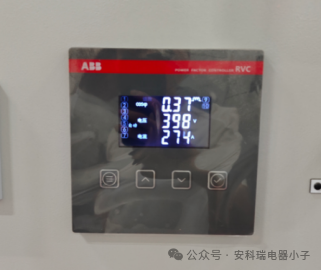
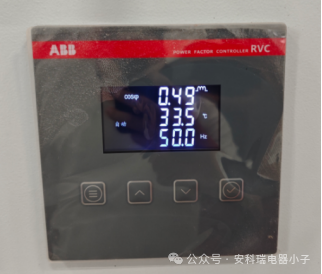
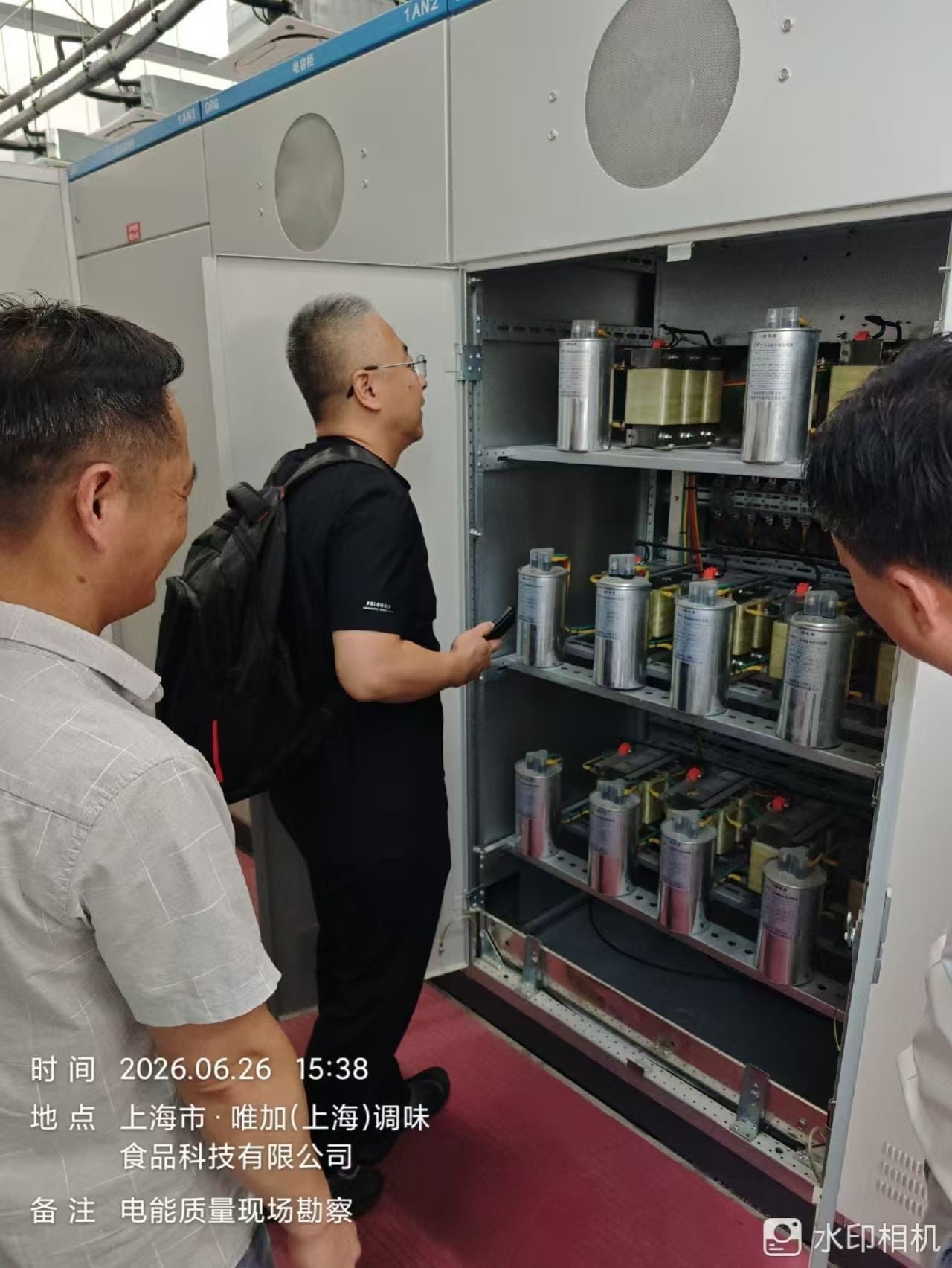
Traditional SVC capacitor compensation cabinets rely on mechanical switching of capacitors. They respond slowly, compensate only in steps, and risk harmonic resonance amplification — capacitors easily overheat, bulge and burn out under such conditions. Capacitor banks cannot fully resolve the PV aftereffect. The Acrel ANSVG static var generator offers more suitable compensation technology for PV-connected sites: it injects controllable reactive current into the grid in real time, delivering stepless, bidirectional, millisecond-level compensation.
Response time < 5 ms, tracking load fluctuations instantly and maintaining power factor above 0.95 continuously.
Continuous adjustment between inductive and capacitive modes — compensates reactive power or absorbs excess reactive power generated by PV systems.
Suppresses selected harmonic orders while compensating reactive power, protecting distribution equipment.
Modular design with independent operation. A single-unit fault will not shut down the whole system — easy maintenance, high reliability.
Large touchscreen displays real-time readings of power factor, current, harmonics and other electrical parameters for straightforward status monitoring.
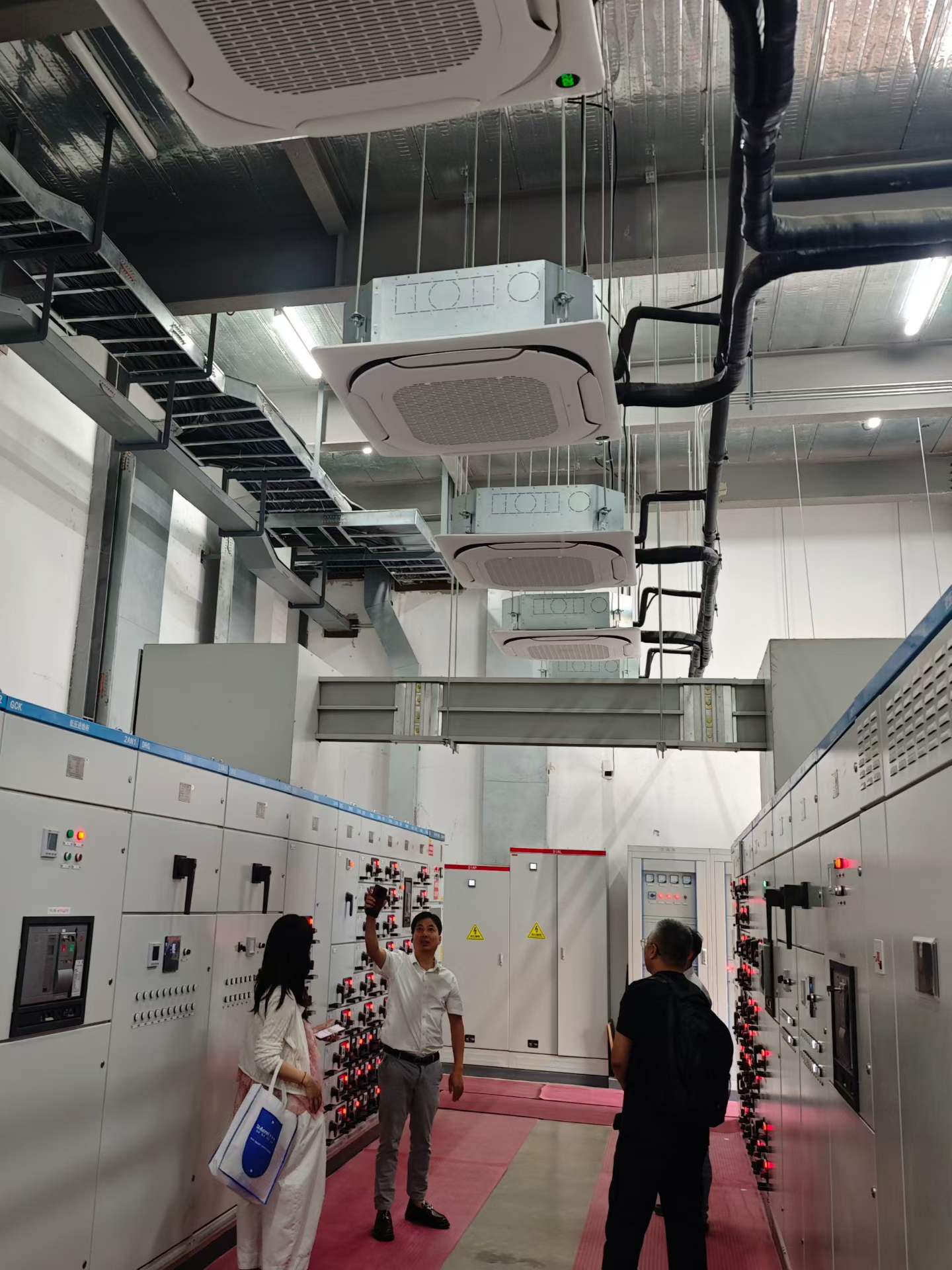
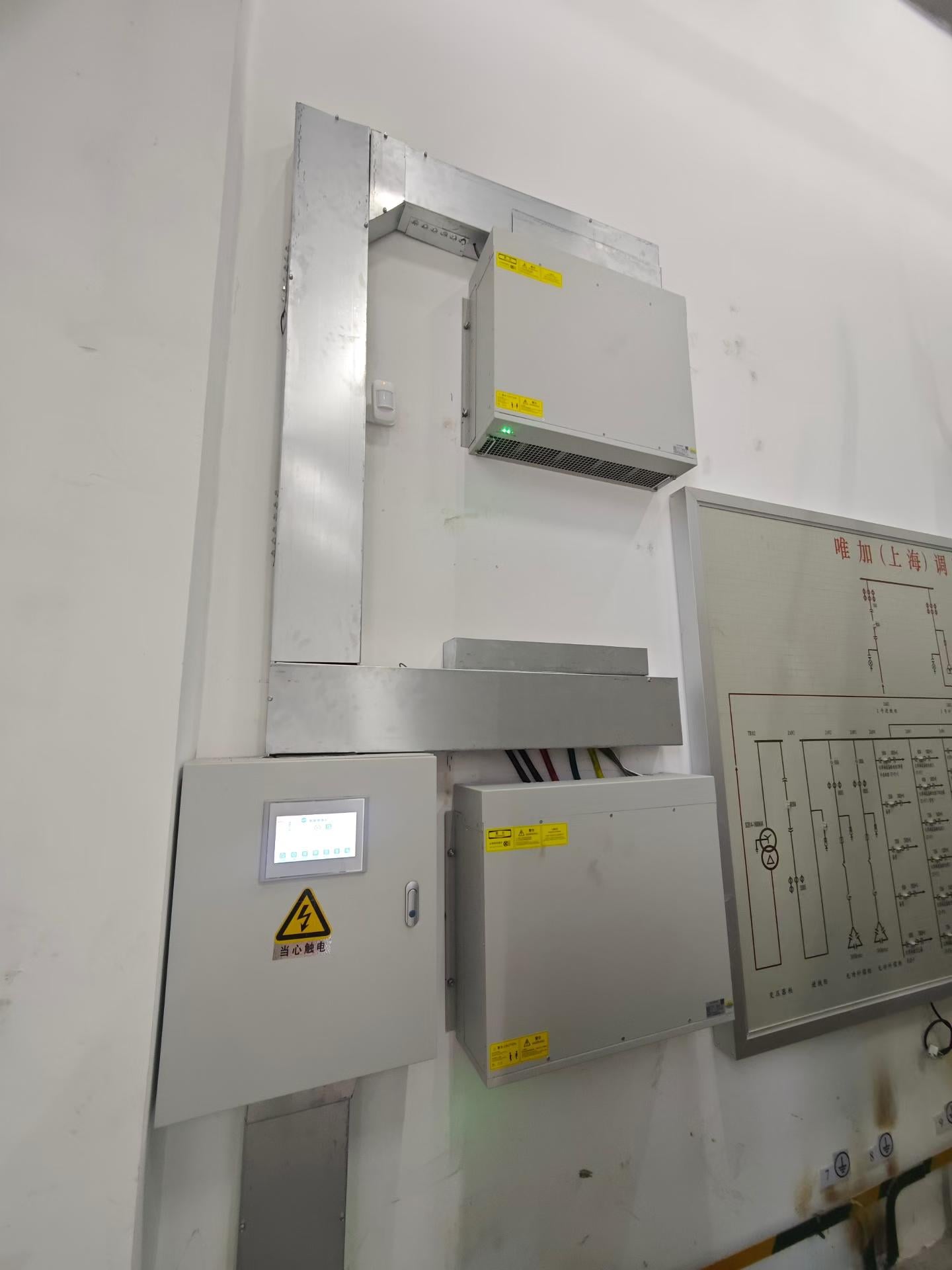
According to on-site load analysis and compensation requirements, Acrel designed a parallel ANSVG solution for this factory. Each of the two 1600 kVA transformers is equipped with 2 units of 150 kVar ANSVG, 4 units in total, replacing the original SVC capacitor compensation cabinet.
- Transformer #1 — 2 × 150 kVar ANSVG provide linear real-time reactive compensation and stabilise power factor above 0.95.
- Transformer #2 — 2 × 150 kVar ANSVG eliminate utility power-factor penalties.
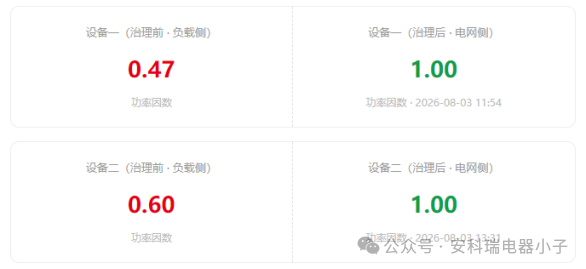
Field data recorded by the ANSVG touchscreen shows remarkable results. Before retrofit, the load-side power factor of Unit 1 was 0.47; after commissioning, the grid-side power factor reached 1.00. Unit 2 saw the load-side power factor rise from 0.60 up to 1.00 on the grid side.
The utility invoice shows tangible economic benefits. According to the official power bill of July 2026:
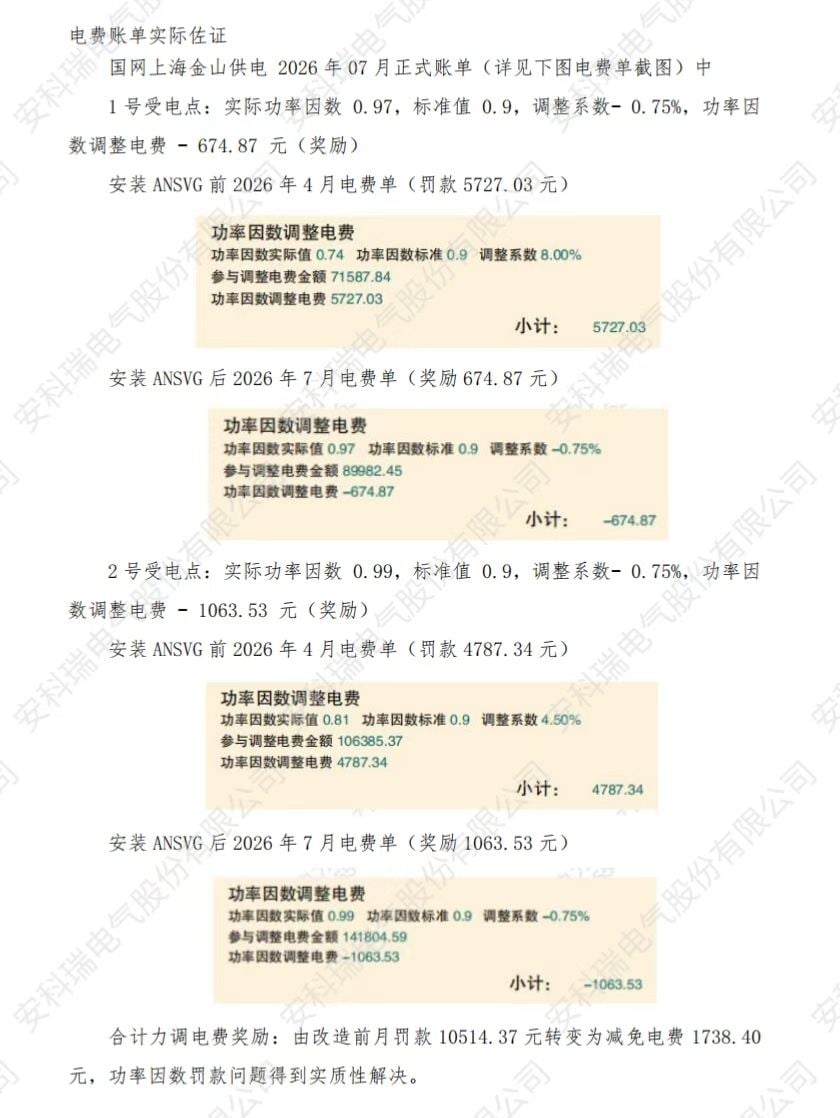
| Results at a Glance | Before ANSVG | After ANSVG |
|---|---|---|
| Grid-side power factor | 0.47 / 0.60 | 1.00 |
| Monthly power-factor charge | Heavy penalty | Reward PEN 1,738.40 |
| Capacitor failures | 13 of 40 bulged | Eliminated |
| Estimated annual saving | — | ≈ PEN 21,000 |
Additional long-term benefits include eliminating capacitor bulging failures, transformer loss reduction and line energy saving.
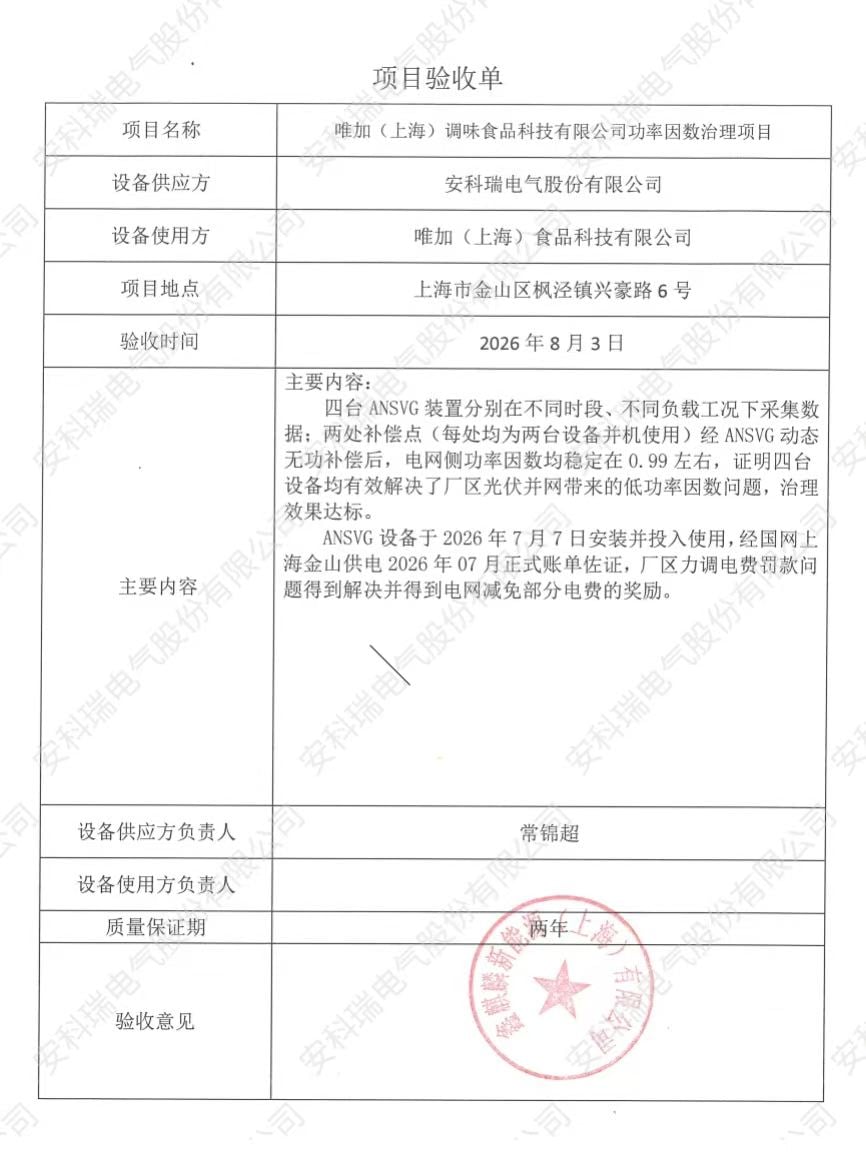

The Acrel ANSVG series holds multiple authorised invention patents, software copyrights, utility-model and design patents, ensuring reliable quality for every delivered unit.
Tell us your transformer capacity and power-factor situation — we recommend the right ANSVG configuration with price.

October 26, 2016
The Most Successful Engineering Contractor



Contact US
Product Information
Quantity
Unit
Piece
Support order samples, customization, wholesale direct, and complete payment. If the product you look for does not have corresponding customized content, pls fill out the form below to contact us, and we will reply ASAP.