
Solving Islanding and Power Quality Challenges for Industrial PV Projects — Case Study of Tesla Gigafactory Shanghai PV Grid‑Connected System
Sep 11, 2026
Against the backdrop of global carbon peaking and carbon neutrality goals, distributed photovoltaic power generation has been widely deployed in industrial plants and industrial parks due to its environmental benefits and flexible installation. However, PV output fluctuates randomly with sunlight conditions. After grid connection, it easily causes power quality problems such as harmonic distortion, voltage fluctuation and islanding effects, posing potential risks to precise production equipment and the safe operation of internal power grids in industrial enterprises.
Adopting a combined solution of online power quality monitoring devices and anti‑islanding protection devices, the distributed PV project at Tesla Gigafactory Shanghai effectively eliminates various hidden risks brought by PV grid connection. It provides a practical and replicable reference for the safe implementation of distributed photovoltaic systems in large‑scale industrial factories.
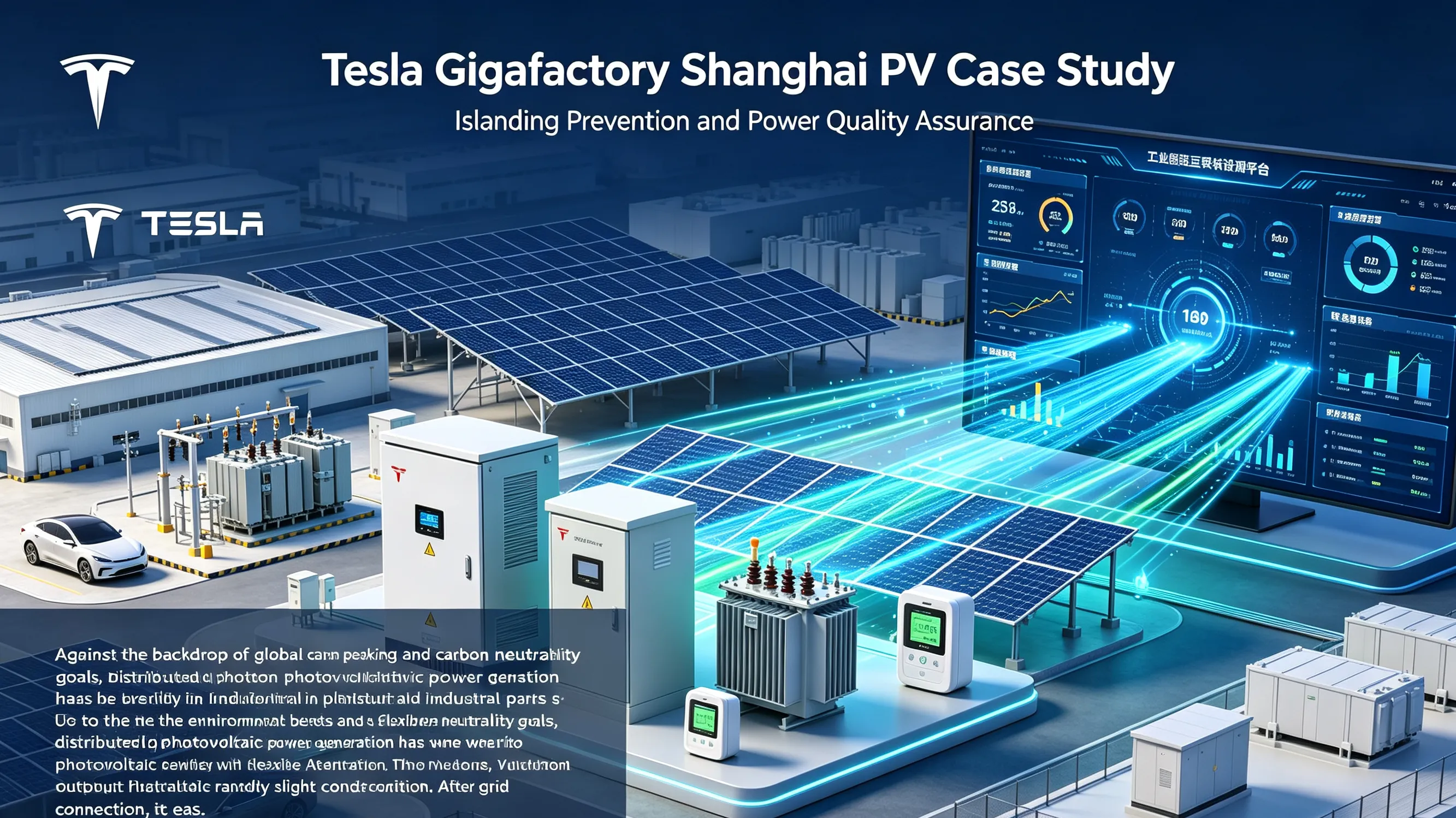
1. Project Overview
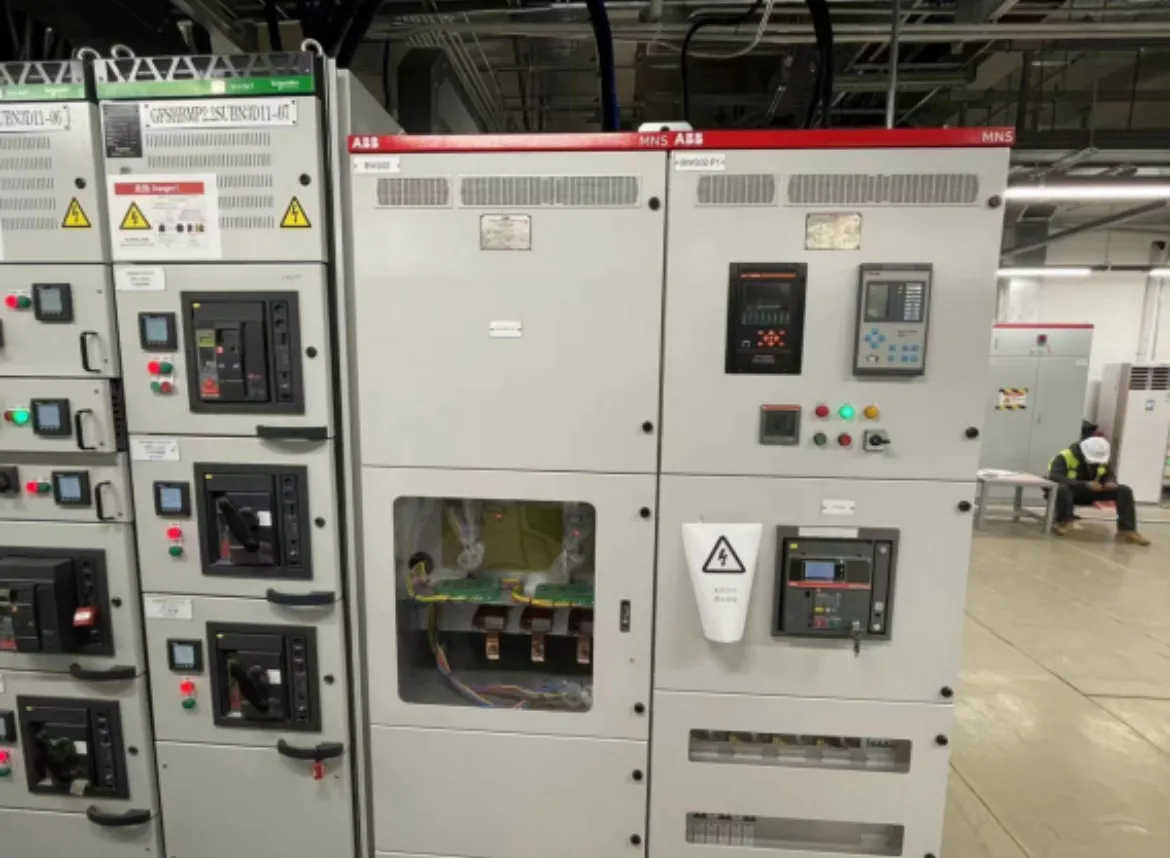
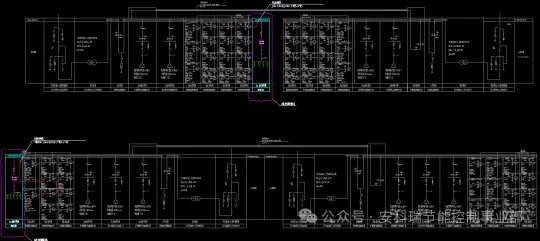
Located in Pudong, Shanghai, Tesla Gigafactory Shanghai is a major wholly foreign‑owned complete vehicle manufacturing base. The factory originally adopts a 10/0.4kV power distribution system, including 4 high‑voltage cabinets, 4 transformers and 31 low‑voltage cabinets.
In this project, the newly added distributed photovoltaic system adopts 0.4kV low‑voltage grid connection with two grid connection points (No.1 and No.2), connected to the outgoing switches of the original low‑voltage distribution cabinets.
The factory features highly automated production lines with a large number of precision motors and electronic control equipment that require extremely stable power supply. The grid‑connected photovoltaic system must not affect the reliable operation of vehicle and battery production lines.
2. Key Challenges of PV Grid Connection in Industrial Plants
Photovoltaic power generation depends on solar irradiance, resulting in random output power fluctuation. Meanwhile, the operation of PV inverters will cause electrical disturbances, mainly bringing two major types of risks for industrial scenarios:
Power Quality Disturbances Threatening Production Equipment Safety
-
Voltage fluctuation and flicker: PV power output changes with sunlight intensity, causing continuous voltage fluctuation and abnormal motor operation, which interferes with automated production lines.
-
Harmonics and DC component: The operation of PV inverters generates harmonics and DC components that flow into the power grid, damaging electronic components and triggering equipment failures.
-
Voltage swell, voltage sag and frequency deviation: Cloud shading and other uncertain working conditions lead to abnormal voltage and frequency, which may cause production line shutdowns and huge economic losses in severe cases.
Islanding Effect Bringing Safety Hazards for Personnel and Equipment
When the public power grid fails or cuts off power, the photovoltaic system may continue generating electricity and form an independent "islanding power system". In this condition, maintenance staff face electric shock risks during grid maintenance. In addition, continuous power supply from PV systems to fault points will further aggravate equipment damage.
In accordance with national standard GB/T 19964‑2012, Class A online power quality monitoring equipment and independent anti‑islanding protection devices are mandatory for PV grid connection points to ensure grid operation safety.
Combined with on‑site actual conditions, the core technical requirements of the project are clarified as follows:
-
Real‑time monitoring of grid connection indicators including harmonics, DC components, voltage deviation and three‑phase unbalance;
-
Generator locking within 0.1s when low voltage drops below 50% Un, and automatic reconnection when detected voltage reaches 85% Un;
-
Rapid tripping protection against islanding and other faults, with automatic grid reconnection after fault elimination;
-
Remote transmission of voltage, current, power data and protection event records of two grid connection points to substation and dispatching center.
3. Solution: Dual Guarantee of Monitoring + Protection
Two additional grid‑connected cabinets were deployed on site. Each cabinet is equipped with APView500PV power quality online monitoring device and AM5SE‑IS anti‑islanding protection device, realizing visible operating status and reliable fault cut‑off for the PV grid system.
APView500PV Power Quality Online Monitoring Device
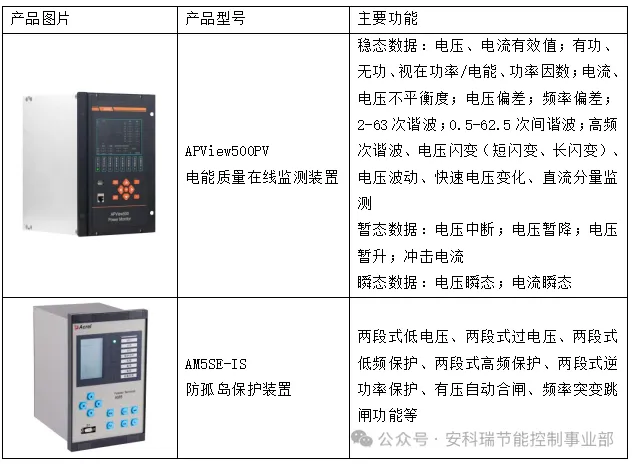
As a Class A power quality monitoring device compliant with GB/T 19862‑2005 national standard, it realizes full‑dimensional monitoring of grid connection points:
-
Steady‑state monitoring: Real‑time collection of voltage, current, power, power factor, voltage deviation, frequency, 2nd to 63rd harmonics, inter‑harmonics, flicker, DC component and three‑phase unbalance;
-
Transient event capture: Accurate recording of voltage sag, voltage swell, short‑time interruption and impulse current with complete waveform recording;
-
Remote data transmission: Upload power quality events and statistical data to the background and dispatching system, helping operation and maintenance personnel analyze PV grid impact and locate fault causes efficiently.
AM5SE‑IS Anti‑Islanding Protection Device
Professionally designed for PV grid‑connected islanding risks, it integrates comprehensive protection logic including over‑voltage/under‑voltage protection, over‑frequency/under‑frequency protection, reverse power protection and frequency mutation tripping, supporting automatic closing with voltage detection.
Once a grid outage causes islanding risks, the device quickly trips the grid‑connected circuit breaker to eliminate live islanding status and ensure maintenance personnel safety. It cuts off PV power supply during grid faults to avoid secondary equipment damage. After grid power recovery, the system automatically reconnects PV power generation under qualified voltage conditions, reducing manual operation and improving overall O&M efficiency.
Installed inside grid‑connected switch cabinets, the two types of devices collect on‑site electrical data independently and cooperate with each other. The monitoring device realizes full‑state perception of power quality, while the protection device ensures rapid fault response, fully meeting the supervision requirements of power dispatching centers for industrial PV stations.
4. Project Value
1. Stable Production Operation
The system real‑time captures power quality abnormalities such as harmonics and voltage fluctuations, triggering timely alarms. It effectively avoids production line shutdowns and precision equipment damage caused by photovoltaic grid disturbance.
2. Enhanced Electrical Safety
The anti‑islanding protection module rapidly cuts off faulty grid‑connected loops, eliminates personal safety hazards caused by islanding effects, and supports automatic recovery after fault removal, greatly improving the intelligent operation level of industrial PV stations.
3. Full Compliance with Grid Standards
The complete solution fully complies with national grid connection specifications for distributed photovoltaic systems. All operational data can be remotely uploaded to power dispatching platforms, realizing standardized and compliant grid access for industrial PV projects.
4. Data Support for System Optimization
Accumulated long‑term power quality historical data helps analyze PV power generation characteristics, providing reliable data support for subsequent PV capacity expansion and overall power distribution system optimization of industrial parks.
5. Summary
Distributed photovoltaic systems are increasingly popular in industrial parks and manufacturing plants. Most enterprises focus on power generation benefits while ignoring the hidden dangers of power quality disturbance and islanding risks.
For industrial scenarios with high‑value production equipment and huge shutdown losses, safe PV grid connection relies on two core foundations: professional power quality monitoring and reliable anti‑islanding protection.
With the continuous upgrading of new power system construction, safety management standards for commercial and industrial distributed PV projects will be further improved. The integrated "monitoring + protection" solution will become the standard configuration for factory photovoltaic grid‑connected projects worldwide.
Contact
Mia, Market Manager for Peru of Acrel, Responsible for Acrel business development in Peru 📞 Phone: +86 187 2109 7719 📧 Email: mia@acrel.cn
Recent Posts

October 26, 2016
The Most Successful Engineering Contractor.webp?x-oss-process=image/resize,w_100/quality,q_100)



Contact US
Product Information
Quantity
Unit
Piece
Support order samples, customization, wholesale direct, and complete payment. If the product you look for does not have corresponding customized content, pls fill out the form below to contact us, and we will reply ASAP.